
Resisting the Resistance
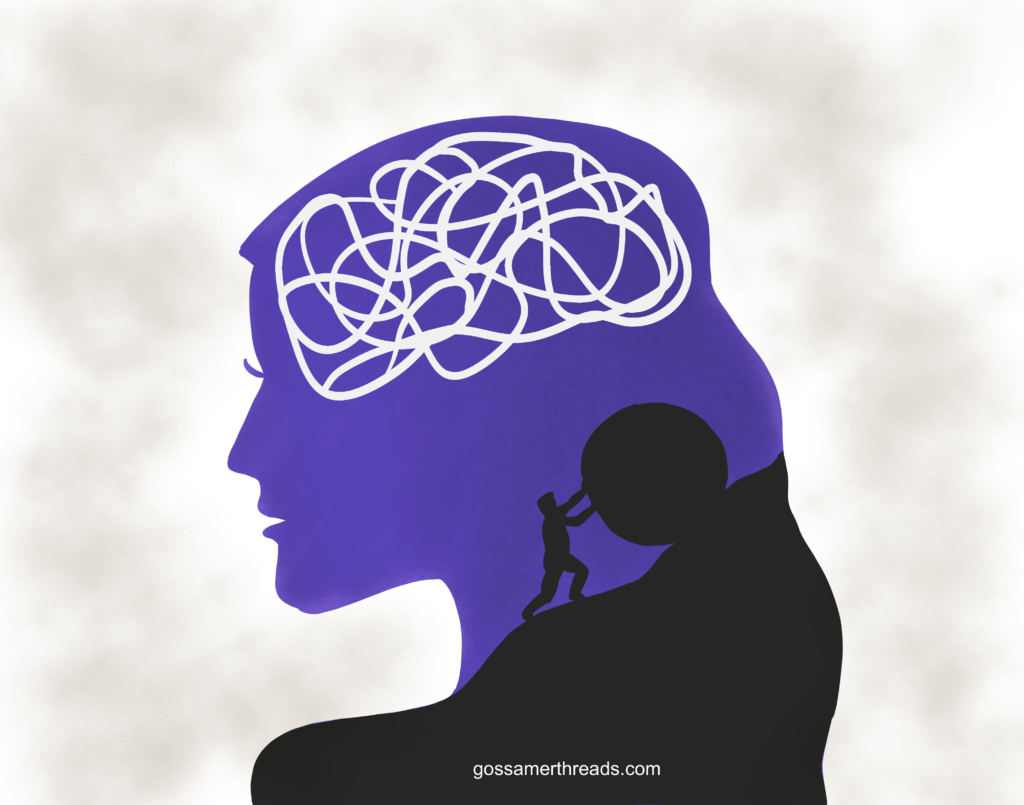
The world’s most destructive force lives within us. All of us.
It’s like a kaiju that rises from our depth to destroy every creative instinct we may have, without the obligatory atomic breath or lumbering girth. It’s deceptive, it’s quiet, it pretends to be your friend as it leads you down a path of comfortable misery, never letting you achieve what you most want in life. You battle it every day knowing that you can never defeat it. Even if you score a temporary victory over it on a particular day, it will rise again the next morning to fight you. In this Sisyphean struggle, you are always the underdog.
Laid bare in Steven Pressfield’s book The War of Art:
Break Through the Blocks and Win Your Inner Creative Battles, this force
rises in opposition to our desires to create, to take on any long-term action
that might be good for us and others. It is invisible, implacable, infallible
and lies at the heart of our misery, more so than poverty, disease and, as
Pressfield notes, a certain type of sexual dysfunction that afflicts about 50%
of the human population. He calls it Resistance.
Most of us have two lives, Pressfield tells us: one that we
live and another that we wished we lived. Resistance stands between them.
Every artist, every creative individual can recognize the
symptoms of this force and how it manifests itself within our lives. They know,
all too well, the low-grade misery that becomes a normal part of our everyday
being. This misery if left unchecked can lead to addiction, depression,
dysfunction. We find ourselves getting into trouble because it gets us attention.
We imagine ourselves living a grandiose fantasy rather than focus on our
present. We self-medicate, we criticize – ourselves and others. We can be
cruel. We become consumed by self-doubt and fear. But most of all we
procrastinate. Pressfield calls it the most common manifestation of Resistance
– the easiest to rationalize. We don’t stop ourselves from doing the very thing
we know we should be doing. We just put it off until the next hour, the next
day, the next week.
Per Pressfield:
The most pernicious aspect of procrastination is that it can become a habit. We don’t just put off our lives today; we put them off till our deathbed. Never forget: this very moment, we can change our lives. There never was a moment, and never will be, when we are without the power to alter our destiny. This second, we can turn the tables on Resistance. This second, we can sit down and do our work.
We know what is good for us. All we have to do is dedicate time to pursue the very thing that would make us happy, that would elevate us to that higher plane of living. Yet, we put it off.
Brianna Wiest, in her essay The Knowing-Doing Gap: Why We Avoid Doing What’s Best For Us, and how to Conquer Resistance for Good, plugs in to this age-old question of why we avoid doing what’s best for us, because understanding resistance is the key to undoing it. It’s not as though we don’t know what is good for us; it’s that we choose otherwise anyway. There are many reasons we self-sabotage, she tells us, and most of them have something to do with comfort:
Modern society (innovation, culture, wealth, success) is designed to convince us that a ‘good life’ is one that is most comfortable, or able to provide us with a sense of being pain-free and secure. This is pretty directly related to the fact that human beings are hardwired to seek comfort, which translates to us as survival – we’re physiologically designed that way. It only makes sense that in our more fully actualized intellectual and emotional lives, we’d want the same.
We yield to Resistance because it feels comfortable. Comfortable and miserable. The way to move past that misery is to contemplate the alternative. Per Wiest:
Moving yourself past resistance is a matter of shifting your perception of comfort. It’s about considering the alternative. It’s altering your mindset to focus on the discomfort you will face if you don’t do the thing in front of you, as opposed to the discomfort you will face if you do.
Wiest asks us to imagine where we would end up if we had to live out our current day or any average day on repeat for the rest of our lives. Would we be happy? Accomplished? Wondering if we missed out on the great love of our life? Would we quantify the hours and days spent not doing the thing we loved because we gave in to Resistance and live in regret that we didn’t become the thing we were put on this earth to be?
But perhaps the insidious kaiju within us prevents us from imagining our lives in repeat. Fortunately, we don’t have to because we have Harold Ramis’ superb Groundhog Day.
This 1993 movie introduces us to Phil Connors (Bill Murray) who is damned to repeat one day of his life over and over again. Phil, a cynical and arrogant weatherman, is in Punxsutawney, Pennsylvania to cover a Groundhog Day festival and finds himself reliving February 2 over and over again. At the start of the movie, Phil is an arrogant man who views his assignment and the people of Punxsutawney with contempt. He is ready to move on to his next job and achieve the success he is so confident he will achieve; it’s a foregone conclusion. What trips him up is the time loop. Try as he might, he is unable to escape the small town or February 2nd. As he comes to realize he may never escape the time loop he finds himself trapped in, he begins to change – first for the worse and then for the better. And in this change for the better, Phil finds true happiness.
This change for the better doesn’t happen near instantaneously. Once he realizes he’s stuck in a time loop, Phil embarks on a journey of hedonism – seducing women, robbing a bank, eating unhealthy food. Predictably, these actions don’t bring Phil any peace or satisfaction. They feel empty. He tries to seduce his co-worker Rita (Andie MacDowell) and fails. He tries to end his life – driving off a cliff, using a toaster in the bathtub – and fails. Try as he might, he is unable to escape the time loop. After his many detours and failures, Phil comes to genuinely care about the people around him. He uses the time loop to help others and to become a better version of himself. He learns to speak French, to ice-sculpt, to play the piano. These actions change his life for the better and he becomes the man Rita could love. This transformation, achieved over a single day through multiple lifetimes, wins her over. The time loop is finally broken and he wakes up in bed on February 3rd with Rita beside him.
Most people don’t consider Resistance to be a central theme of the movie Groundhog Day. But it is easy to see ourselves in Phil, as individuals who go through life living a low-grade misery – being unkind to others, not appreciating our present and indulging in destructive behaviors – because we are too afraid to change, too eager to give in to the Resistance because it feels comfortable. The movie resonates because we identify with him: Phil is stuck; so are we. Phil changes for the better; so can we. His journey gives us hope and a path out of this life of perpetual misery.
Groundhog Day is a delightful reminder that whether we are battling Resistance or time loops, putting in the work, every single day, brings us closer to our desired state of being and that is the true reward we should be working towards. We may be the underdog, but every dog can have its day. Every day.